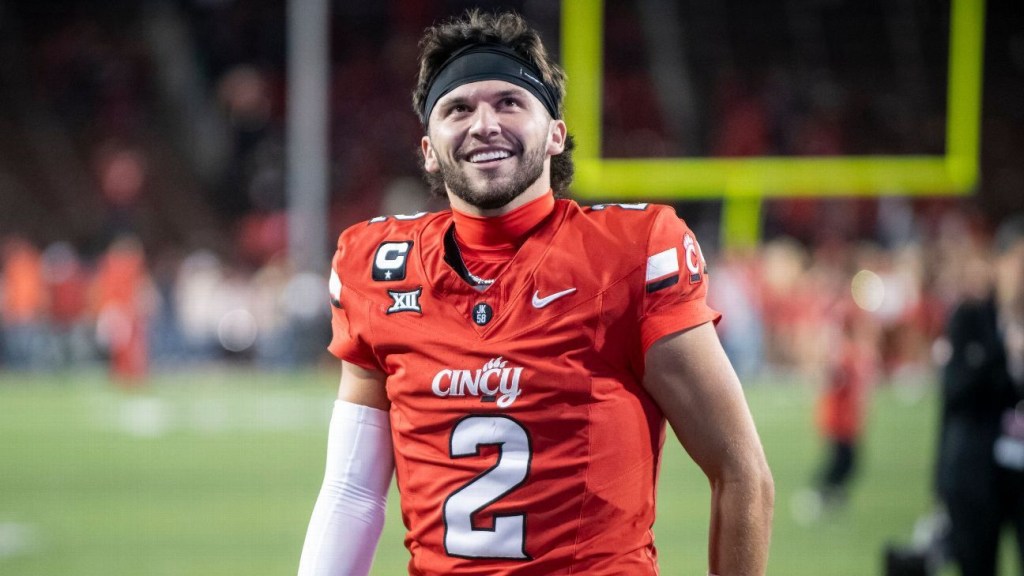
The NCAA’s Highest paid football player just admitted to a gambling problem. Why this matters.
Anyone with 20$ in their bank account right this second could load their last Andrew Jackson into a gambling app and dump it straight into the incinerator.
Brendan Sorsby, who is being compensated roughly 5$ Million to play quarterback at Texas Tech this season after transferring from Cincinnati, was headed down that path. In an era of firsts, Sorsby introduced the college football world to a new one— He publicly admitted to a gambling problem and checked into a residential treatment program.
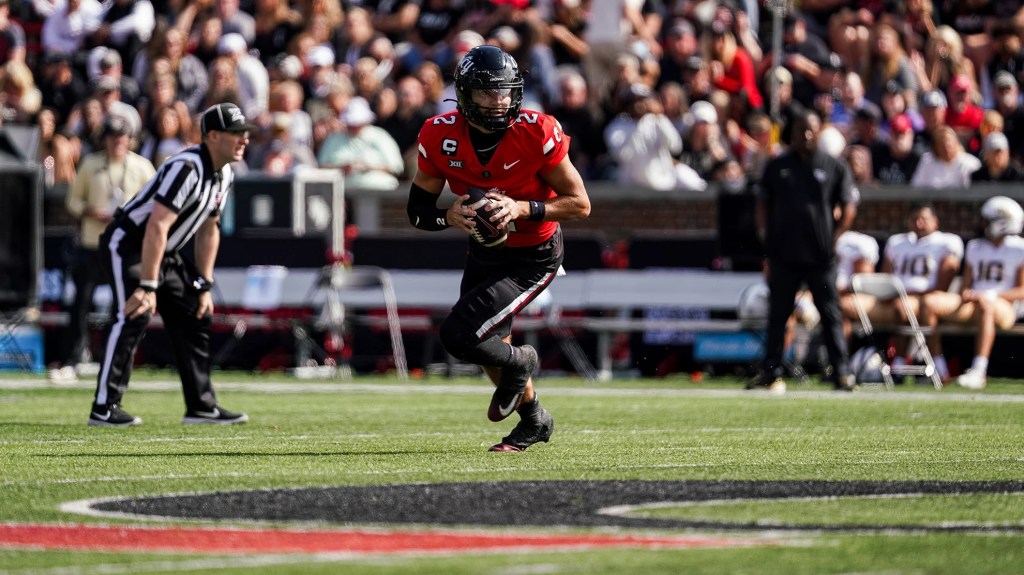
If it isn’t already obvious, this is a big deal. The NCAA is relatively strict on betting. According to the NCAA, student-athletes who engage in activities to influence the outcomes of their own games or knowingly provide information to individuals involved in sports betting activities will potentially face permanent loss of collegiate eligibility in all sports. This would also apply to student-athletes who wager on their own games or on other sports at their own schools. As far as it is known, Sorsby did not bet on any games in which he participated. He was on the team at Indiana University in 2023 and had placed wagers on the Hoosiers to win in games that he did not see the field.
If the NCAA wants to stand their ground on the rules they already have in place, Sorsby’s career is over. This is the most likely outcome, though they have been flimsy of late with the amount of changes on their plate in the last several years (e.g. the transfer portal, NIL, eligibility rules, etc.).
There is a school of thought that poses the question, did Sorsby divulge his gambling activity to perhaps soften the blow of potential NCAA punishments? The answer to that question is not, and may never be known. This would also then assume that Sorsby or Texas Tech knew that this information would eventually leak in the first place, another answer that is simply unknown at this time.
There is a real possibility that this is simply a college kid that is addicted to gambling. After all, that is more common today in the United States than ever before. Statistical data on addicts is available, but an addict must self-report to be included in said data. The most accurate data we do have is the relentless increase of cash being lost and wagered on a yearly basis. 2019 was the first full year of legal sports betting in the U.S., where commercial sports betting revenue was approximately $900 million. The “handle” is the total number of cash wagered; that number settled at $13 billion in 2019. In 2025, both of those numbers unveil the incessant growth of the industry as a whole. The revenue in 2025 was nearly $17 billion. The handle in 2025 was $166 billion. Even if you aren’t good with numbers, you understand that these numbers are staggering, and quite frankly a snapshot of the direful reality that is gambling in the U.S.
Considering the extreme growth of the industry, it is important to remember the cliches. “The house always wins” is not some metaphor or clever euphemism. It is a direct warning, and since most folks won’t take it as seriously as it is, let’s be completely clear. This is a non-negotiable, mathematically proven fact. The more total handle, the more money is shoveled into the pockets of the sportsbooks. This isn’t dumb luck, they will tell you to your face that the odds they provide will give them the mathematical advantage to ensure they always come out on top. Increase the total handle, the revenue is mathematically guaranteed to follow suit. The money in the pocket of the working man is inversely related to the revenue of commercial sportsbooks.
People bet anyway. More of them each year than the last, for seven years running. It just so happens that the highest paid player in college football is one of those people.
An argument could be made that this entire situation is good for college sports, and good for the common college-aged gambler. With a high profile name like Sorsby confronting his issue out in the open, a space has been created for others to do the same. Most gamblers won’t even admit that they have a problem. Sorsby’s story can create a blueprint for others to address theirs, even if it’s only within their own social circle.
The most recent data suggests that 6 percent of college students have a serious gambling problem. From a young age, these people are learning how to gamble away all of the money they have, and then still get by. This is not exclusive to finance majors or future lawyers. Athletes fall under this statistical umbrella of gambling addiction. Based on this data, you can be absolutely certain that there are more athletes out there who are problem gamblers. The more accessible gambling becomes, that number of athletes will continue to climb.
Why this matters is really simple. The only thing that separates sports from reality TV or the WWE is the fact that the outcome is truly unknown. In the NCAA’s terms, this is the integrity of the game. The idea that every player on the field is motivated to win is the entire appeal of watching sports. There is no script (although a degenerate gambler will swear up and down that there is), there are no ulterior motives, there is no outside influence of outcomes. When it is the players who are betting, there is a real possibility they can use their control of the outcome to influence it accordingly to win a bet.
A common misunderstanding when it comes to players aiming to fix the outcome of games is the thought that “Vegas made the call.” As already discussed, “Vegas” which is a common name used to describe the gambling industry powers as a whole, needs no help from players willing to fix outcomes to make money. The sportsbooks already have the mathematical advantage in the odds that they provide. It is more beneficial to them when the game is truly decided on the playing surface, as it convinces more people to wager. That is all they need. In a situation where games would be fixed or rigged, it is not Vegas, but a third party entirely. Most often, it is a player’s friend or family member looking to squeeze some cash from their connection.
Since legal sports betting began in the U.S., there has been a smattering of gambling scandals in college sports that have come to light. Sorsby’s case isn’t so much a scandal as it is simply a young man taking responsibility for his shortcomings, though it will be painted in a similar light. If he doesn’t play college football again, he will be remembered as the guy who let gambling end his career. (He is currently under investigation.)
Just recently, an enormous gambling ring involving 39 division one college basketball players on 17 different teams was uncovered. Players were accepting bribes from “fixers” who paid them to play poorly, resulting in their team not covering the point spread. The fixers would place wagers on opposing teams of the players they had bribed, ensuring huge profits. None of the fixers worked for any sportsbooks or casinos, they didn’t have any position in “Vegas”, they were just some degenerate gamblers trying to beat the big books.
Maybe these players who accepted bribes didn’t have problems like Sorsby. Maybe they didn’t gamble at all before they were approached by these fixers. The truth is, they complied. There was an understanding that what they were doing was larger than life and could permanently ruin their playing careers.
The difference between them and Sorsby, and any other athletes who tried to influence an outcome of their own games for money, is integrity. Sorsby has a real problem, but he didn’t make it anyone else’s. He didn’t lie to his teammates or coaches or fans. He didn’t try to ruin a sacred institution’s reputation for honesty.
He is just a kid with an addiction. An addiction that is coming to your community like a phantom in the night. Disguised as a social pastime right in our faces 24/7. Sorsby is a microcosm of what is to come.
You can bet on it.


Leave a comment